
VOLUME 01 ISLAND INSIGHT • CHAPTER 05
Nusa Lembongan and Ceningan Infrastructure Update: July 2026
How earlier infrastructure plans compare with what has been repaired, started and still remains in progress.
- August 10, 2026
- 7 Minutes Read
Infrastructure across Nusa Lembongan and Ceningan is no longer only a list of intentions. Several priorities discussed in earlier plans can now be read against the condition on the ground. The Yellow Bridge repair is complete. Road and drainage improvements are visible in Nusa Lembongan. Road work has begun in Nusa Ceningan. Clean water expansion has also moved forward, although it has not yet reached the same level of operational certainty.
This article looks beyond the announcement itself. It compares what was planned, what has been delivered, what is underway and what still requires confirmation. That distinction is especially important on small islands, where a new facility or funding decision can be significant without immediately changing service conditions for every resident, operator or project site.
From earlier plans to current progress
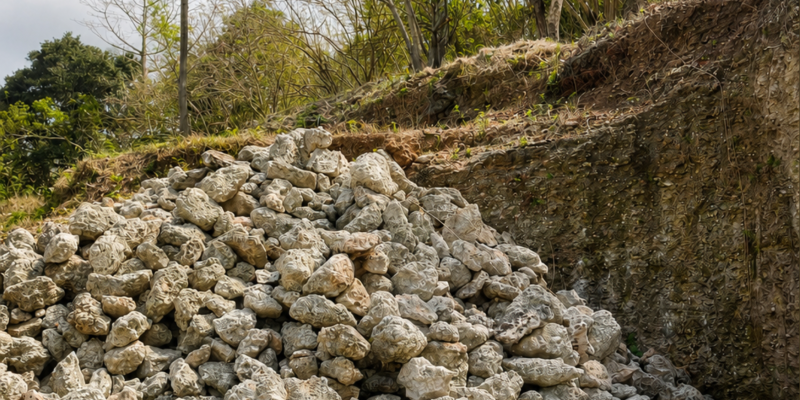
Earlier infrastructure plans focused on four recurring capacity issues: safe movement between the islands, better road conditions, control of rainwater beside the roads and more reliable clean water. Government records placed those priorities at different stages, including completed maintenance, environmental review, announced financing and formal project submissions.
The first layer of realization is now visible on site. Maintained bridge components are carrying daily movement again. Repaired road surfaces and new drainage channels can be seen in Nusa Lembongan. Construction activity has started on road sections in Nusa Ceningan. These are meaningful changes, but they should not be combined into one blanket claim of completion. Each project needs to be read according to its own scope and status.
Yellow Bridge: repair completed, transport limits unchanged
The Yellow Bridge remains the essential daily link between Nusa Lembongan and Ceningan. A maintenance programme carried out during 2025 covered railings, bridge plates on the Nusa Lembongan and Ceningan sides, and supporting work. Contemporary reporting placed the package at approximately 1.4 billion Indonesian rupiah (IDR 1.4 billion), while Klungkung Regency’s 2026 programme review later recorded the bridge repair among the infrastructure works that had been realized.
This is now a completed repair rather than an outstanding plan. The result is visible in the bridge’s continued use by pedestrians, motorbikes and smaller daily deliveries. It supports school journeys, work, family movement and access between the two islands.
The repair did not change the bridge’s basic operating limits. Cars, heavy equipment and larger loads still depend on sea transport and the road network on each island. A separate permanent bridge submitted as a government priority in July 2026 is a different project. It remains a proposal until its design, funding, procurement, construction and operating rules are formally confirmed.
The Yellow Bridge joins more than land
Between Nusa Lembongan and Ceningan, the Yellow Bridge carries the everyday connection. It is narrow, familiar and heavily symbolic, but its economic role is direct. It gives residents access to work and services across both islands. It lets small businesses reach customers and suppliers. It allows a project on Nusa Ceningan to draw from networks on Nusa Lembongan.
That link also shows the limits of island infrastructure. Capacity is visible. A route can be essential and still be physically constrained. Development decisions need to understand what a shared connection can reasonably carry.
Clean water: moving from construction toward operation
Clean water is at a different stage. At the beginning of 2026, the existing Nusa Ceningan seawater reverse osmosis (SWRO) system, a facility that removes salt from seawater to produce clean water, was reported to be serving 385 household connections across Nusa Ceningan and Nusa Lembongan, with production of about 3.7 litres per second. Its limited spare capacity helps explain why a larger system for Jungutbatu became an important part of the island’s infrastructure planning.
The Jungutbatu SWRO has moved beyond a building announcement. Environmental consultation took place in May 2026, followed by the connection of 1,110 kilovolt-amperes (kVA) of medium-voltage electrical capacity in July. The latest operating target reviewed for this article is November 2026. Reported design figures describe capacity of up to 3,000 cubic metres per day and approximately 450 initial customer connections.
Those figures describe intended capacity, not proven daily delivery. The project should therefore be reported as progressing toward operation, not as a fully available island-wide service. The practical test will be the number and location of active connections, water quality, pressure, storage, tariffs, maintenance, environmental safeguards and reliability over time.
If the system performs as planned, it could reduce dependence on rainwater, saline wells and delivered water, while giving households and businesses a clearer basis for managing demand. Until regular service is confirmed, however, project teams should continue to verify water availability at the exact site rather than assume that new capacity reaches every area.
Nusa Lembongan roads: repairs and drainage now visible
Road improvement in Nusa Lembongan has moved beyond planning in the areas where work has been completed. Dated field documentation shows repaired road surfaces together with new or improved roadside drainage channels. The drainage addresses a practical cause of repeated damage by giving rainwater a clearer route away from low points, road edges and the road base.
That supporting work matters as much as the new surface. A road may look improved immediately after repair, but standing water can quickly weaken its edges, erode the base and recreate the same problem. Better drainage helps protect the investment in the road while making everyday movement safer and more predictable.
The realized work visible on Nusa Lembongan should still be distinguished from the two road priorities submitted to the Ministry of Public Works in July 2026: the Pertigaan SD 2 Nusa Lembongan to Bias Munjul route and the Yellow Bridge to Batu Melawang route. The submission confirms their priority status, not completion of both named packages. Each route should retain a separate status until its contracted scope and completed sections can be matched precisely.
Nusa Ceningan roads: a funded plan now moving on site
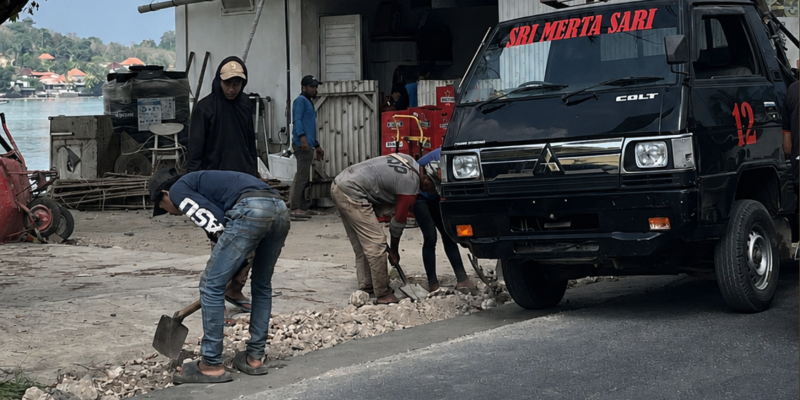
For Nusa Ceningan, the earlier planning record became more concrete in May 2026 when Klungkung Regency announced IDR 9.5 billion in financing for improvement of the Nusa Ceningan Ring Road. Current dated field documentation now shows that road repair activity has begun. This marks an important shift from a funding announcement to visible execution on the island.
It does not mean that the full route is finished. Conditions may differ from one section to another while work continues, with temporary access changes, unfinished edges and construction activity still present. The accurate status is that repairs have started. Completion should only be stated for the exact sections that have been finished and verified, or for the full programme once formal delivery is confirmed.
Why the realization matters
The shift from plan to delivery affects daily island life in practical ways. A repaired bridge supports safer movement between Nusa Lembongan and Ceningan. Better roads improve access for residents, services, supplies and local businesses. Drainage helps those repairs last longer. Additional clean water capacity could address one of the islands’ most persistent service constraints once regular operation is proven.
For investors, entrepreneurs and project partners, the same progress needs a disciplined reading. Completed maintenance, finished road sections, active construction, commissioning and proposals carry different implications for access, logistics, utilities, project timing and operating risk. A regional programme does not automatically mean that a particular site is fully serviced.
The useful questions remain site specific. Which road section has actually been completed? Where does the drainage discharge? Can construction materials reach the property? Is a water connection available now, or only planned? What operating limits remain on the bridge? Deeper infrastructure knowledge comes from connecting the public plan to the exact condition on the ground.
A more accurate infrastructure baseline
The current picture is stronger than the earlier plan only view. The Yellow Bridge repair has been realized. Nusa Lembongan road and drainage improvements are visible in completed work areas. Nusa Ceningan road repairs have begun but remain in progress. The Jungutbatu SWRO has advanced through environmental review and power connection, while regular customer service still needs to be confirmed.
Future revisions of this article should retain the same discipline. Every status should be tied to a named project, exact location, date and source. New field evidence should clarify what has changed without allowing a completed section to stand in for an unfinished island-wide programme.
Infrastructure becomes useful knowledge when plans are measured against what is actually working on the ground.
// Source
- - Aquatic Living Resources: Mapping and Estimating Seaweed Harvest Potential
- - BPS Klungkung: Kabupaten Klungkung Dalam Angka 2025
- - Jurnal Pendidikan Ilmu Sosial: The Impact of Tourism Development on the Local Community of Nusa Lembongan
- - Andréfouët and others: Seaweed Farming Collapse and Fast-Changing Socio-Ecosystems in Nusa Lembongan