
VOLUME 02 INVESTOR AND MARKET INSIGHT • CHAPTER 04
Property Due Diligence: Legal, Physical and Commercial Checks
A good property decision verifies the right, the land, the use and the business case before price becomes the only conversation
- August 10, 2026
- 9 Minutes Read
Property due diligence in Nusa Lembongan and Ceningan should answer four questions. Does the seller or lessor have authority? Does the documented parcel match the land on the ground? Can the intended project lawfully and physically operate there? Do the commercial assumptions still work after island costs and risk are included?
Due diligence is a sequence, not a document request
Sending a certificate to a lawyer is important, but it is not the entire process. Property risk sits across legal records, the physical parcel, planning, infrastructure, transaction terms and commercial assumptions. Each layer can change the conclusion from the layer before it.
The review should be independent from the seller’s sales process. The professionals checking the opportunity should report to the investor, define their scope and disclose conflicts. Translation should be reliable, and material advice should be recorded in writing.
Check 1: Identity, authority and transaction path
Confirm the identity of every seller, lessor, company, representative and beneficiary involved. Establish who appears in the official record, who has authority to sign, whether spousal or corporate consent is required and whether a power of attorney is valid for the transaction.
Map the proposed sequence from offer to completion. Identify deposits, conditions, document delivery, tax, notarial work, registration, possession and handover. A property decision becomes safer when the path is visible before money starts moving. Do not rely on the fact that someone is known locally. Reputation can support context, but legal authority still requires evidence.
Check 2: Land right, certificate and encumbrances
Have an independent lawyer or land deed official verify the land right, certificate data, holder, area, registration history and any mortgage, seizure, dispute or other recorded burden. Use the competent land office and current official tools where appropriate.
Compare names, numbers and dates across the certificate, tax records, sale or lease draft, maps and identification. Small inconsistencies deserve explanation. An old copy should not be treated as proof of current status.
For a lease, verify the lessor’s underlying right and remaining authority for the entire proposed term. Review existing leases, occupiers, revenue sharing, family claims and any agreement that could compete with the investor’s use.
Check 3: Boundary, area and physical possession
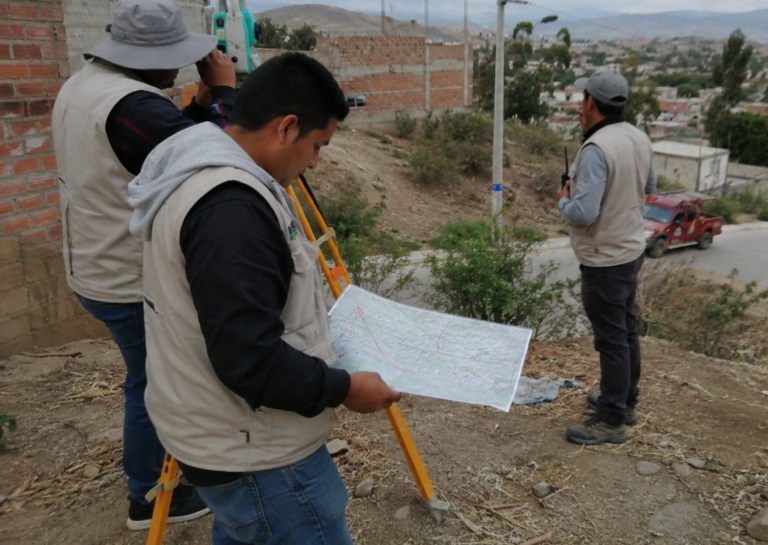
A certificate area is not a substitute for a field check. Confirm the parcel on the ground with appropriate survey support. Locate boundary markers, measure where needed and identify fences, paths, buildings, utilities, drainage and neighbouring occupation.
Ask who uses the land today and how they access surrounding property. A visible path may be a shared route, a customary route, informal permission or a disputed encroachment. The legal status and practical importance both matter.
Photograph and map the inspection with dates. If the physical condition does not match the document, resolve the difference before valuation or design continues.
Check 4: Legal access
Island land can be visually close to a road and still have weak legal access. Confirm the route from public access to the parcel, its width, ownership, recorded rights, vehicle suitability and any agreement required to use or improve it.
Construction access may need more capacity than daily guest access. Test turning, unloading, slope, bridge or lane constraints and the effect on neighbours. A project that cannot move materials safely may carry cost far beyond the purchase price.
Do not treat verbal access as permanent. Record the right in the form recommended by independent counsel.
Check 5: Spatial planning and buildability
Use site coordinates to obtain current spatial information. Review the provincial and regency plans, any detailed plan, coastal and environmental controls, protected areas, setbacks, sacred place considerations and the intended building use.
A positive land title does not create planning permission. The project may need conformity of spatial use, environmental approval, building approval and business licensing. Requirements depend on activity, scale and risk.
Physical buildability then tests slope, geotechnical conditions, drainage, erosion, coastal exposure, retaining, fire access and structural concept. These questions require qualified professionals, not visual estimation.
Check 6: Water, waste, power and connectivity
Confirm the current source, capacity, cost and reliability of water. Estimate demand from realistic occupancy and operations. Identify storage, treatment, backup and any effect on surrounding users.
Map waste from purchasing to final handling. Confirm collection, separation, organic processing, wastewater, residual waste and hazardous material where relevant. Ask what happens when the normal service is unavailable.
Test power and internet at the site. Identify connection status, capacity, outage experience, backup and maintenance. Infrastructure claims should be supported by a current bill, service confirmation, technical observation or written provider information.
Check 7: Existing buildings and approvals
For an existing structure, compare what is built with approved plans and current use. Review building approval, completion or function certification where applicable, environmental documents, business licences, taxes, utility accounts and safety systems.
An attractive operating property may contain legacy issues. A new buyer or lessee should understand what can transfer, what needs correction and whether the operating licence matches the actual activity.
Government Regulation No. 16 of 2021 provides the current national building framework, including Persetujuan Bangunan Gedung (PBG), or Building Approval, and Sertifikat Laik Fungsi (SLF), or Certificate of Proper Function. Local implementation and project requirements still require direct professional confirmation.
Check 8: Tax, liabilities and agreement terms
Map transaction taxes, recurring land and building tax, company tax, withholding, tourism or business obligations and professional fees with a qualified tax adviser. Confirm who pays each item and when.
Review unpaid bills, employee liabilities, supplier claims, management agreements, online platform commitments, insurance, litigation and any promise made to neighbours or community. When acquiring an operating business, the asset perimeter must be explicit. The final agreement should reflect due diligence findings, not simply repeat the first commercial offer.
Check 9: Commercial evidence
Separate market evidence from aspiration. For hospitality, review historical occupancy, rates, channel mix, seasonality, refunds, maintenance, staffing and owner use. Reconcile management reports with bank, platform or tax evidence where legally available.
For development, build a current cost plan that includes island logistics, professional work, approvals, contingency, utility systems and opening. For land hold, model security, maintenance, tax and the cost of waiting.
Use a downside case. If the project only works when every assumption is strong, due diligence has identified a fragile investment even when the legal checks are clean.
Check 10: Community and operating context
Meet the place around the parcel. Understand neighbours, movement routes, ceremony patterns, noise sensitivity, local employment, supply and the project’s expected resource use. This is not a substitute for permission. It is part of designing an operation that can live with its surroundings. Record what is factual, what is opinion and who provided it. Local insight is most useful when it leads to a question that can be verified.
Red flags that justify a pause
Pause when the party requesting money cannot show authority, the boundary is unclear, legal access depends on a verbal promise, the intended use conflicts with planning, documents are withheld until after deposit, the structure is explained as a way around eligibility, or the financial model excludes major island costs.
Also pause when urgency is used to prevent independent review. A genuine deadline can be documented. Pressure is not evidence.
The rule for commitment
Agree in writing what must be true before commitment. Assign responsibility, evidence and a deadline to every condition. Let your lawyer define deposit protection, termination and refund rights.
Due diligence cannot remove all uncertainty. It can show whether the remaining uncertainty is visible, priced and acceptable. That is the standard a serious opportunity should meet.
// Source
- - Bali spatial planning portal, Klungkung detailed plan status
- - Government Regulation 28 of 2025 on risk based business licensing
- - Government Regulation 16 of 2021 on buildings
- - ATR BPN, BHUMI interactive land information
- - ATR BPN, guidance on checking certificate data
- - ATR BPN, Sentuh Tanahku
- - Government Regulation 18 of 2021 on land rights and registration