
VOLUME 01 ISLAND INSIGHT • CHAPTER 04
How the Islands Work Today: Community, Trade and the Local Economy
Behind every easy arrival is a network of boats, roads, relationships, supplies and local knowledge.
- August 10, 2026
- 7 Minutes Read
Nusa Lembongan and Ceningan work as a compact island system. People arrive by sea, goods move through small landing points, businesses depend on local relationships, and community obligations shape the calendar. Understanding that system is useful for anyone who wants to visit, operate or invest here.
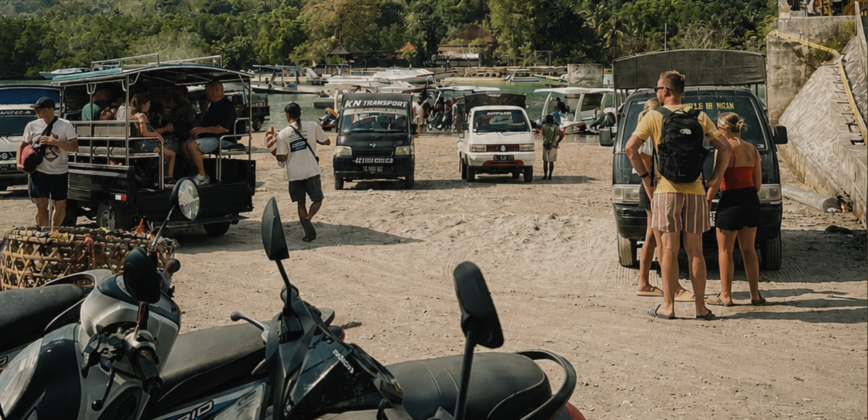
Almost everything begins with a crossing
There is no road from mainland Bali to Nusa Lembongan. That fact sits underneath almost every business model on the islands. Passenger boats carry residents, workers and visitors. Other vessels move food, bottled products, fuel, furniture, machinery and construction materials. A plan that ignores the crossing is not an island plan.
Transport cost is only one part of the calculation. Timing, sea conditions, handling, storage and the final movement from shore to site all matter. Materials that look simple on a mainland quotation may need several transfers before they reach a project. Fragile items face additional risk. Heavy items need space, labour and suitable access.
The same logic applies to people. Staff availability, housing, training and reliable movement affect an operation. A business may be close to a harbour in distance but difficult to service because of road width, slope, congestion or neighbourhood conditions.
The shoreline is a transport interchange
Visitors often read the beach as leisure space. The local economy also reads it as infrastructure. Boats arrive, goods are handed down, scooters wait, drivers coordinate and small businesses respond to the day’s flow. Tourism, trade and household supply can share the same narrow edge.
This creates efficiency, but it can also create conflict. A landing point has to serve different users. Coastal weather changes the experience. Waste, fuel, noise and traffic require management. The quality of island access depends not only on a new structure, but on how movement is organised around it.
The Yellow Bridge joins more than land
Between Nusa Lembongan and Ceningan, the Yellow Bridge carries the everyday connection. It is narrow, familiar and heavily symbolic, but its economic role is direct. It gives residents access to work and services across both islands. It lets small businesses reach customers and suppliers. It allows a project on Nusa Ceningan to draw from networks on Nusa Lembongan.
That link also shows the limits of island infrastructure. Capacity is visible. A route can be essential and still be physically constrained. Development decisions need to understand what a shared connection can reasonably carry.
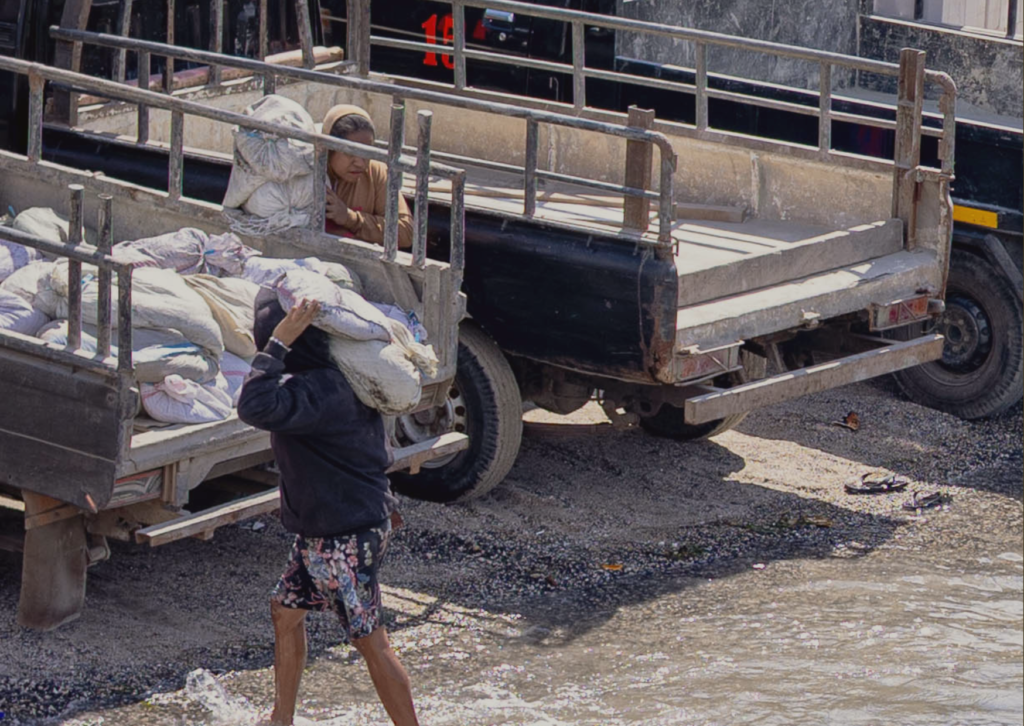
The calendar is social as well as commercial
Island life is organised through more than opening hours. Balinese Hindu ceremonies, temple responsibilities, family events and banjar activity shape when people are available and what takes priority. These are not inefficiencies to remove. They are part of the social system that makes community life possible.
Good operators learn the calendar, communicate early and build flexibility into staffing and delivery. They do not treat community obligations as a surprise. Respect is practical. It improves relationships, planning and the ability to solve problems when formal systems are not enough.
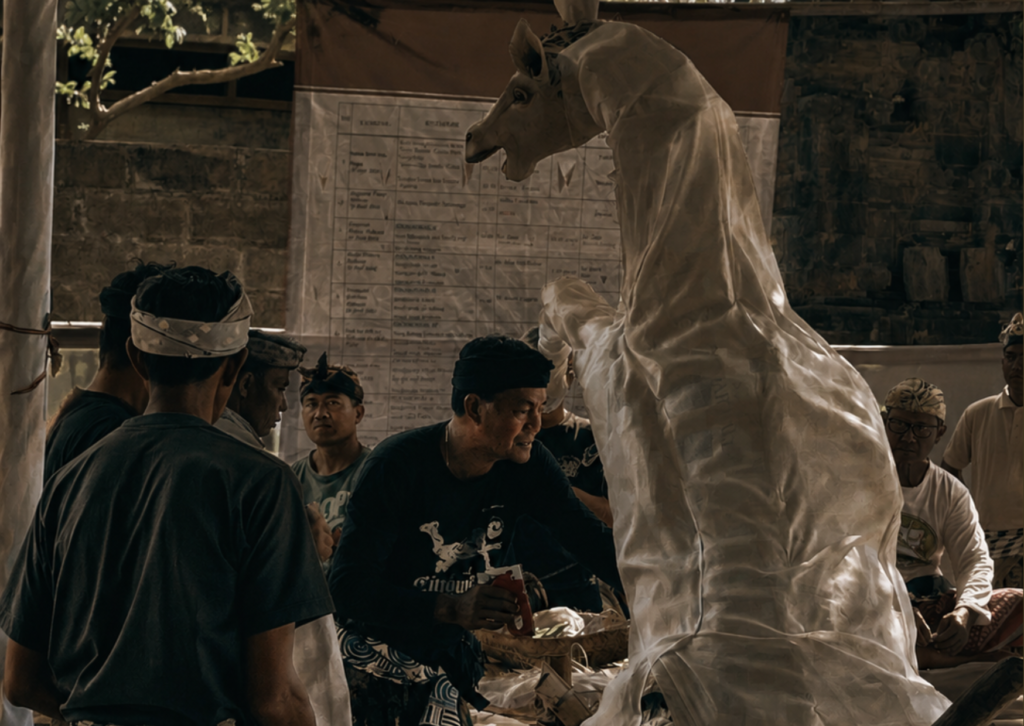
Local knowledge is operational capacity
On Nusa Lembongan and Ceningan, the right introduction can resolve questions that a search engine cannot. A boat operator understands seasonal access. A local contractor knows which materials are difficult to move. A resident can explain how a lane is used, where water collects or why a boundary needs more careful checking.
This does not replace formal due diligence. It makes formal due diligence more intelligent. Documents establish rights and obligations. Local context helps a team know what to verify, who is affected and what may not be obvious from the document alone.
Reputation therefore becomes part of business infrastructure. Service providers depend on word of mouth. Owners remember how a partner behaved during a problem. A project that arrives with a clear process and realistic expectations is easier to support than one that arrives with a promise already sold.
Tourism connects many parts of the economy
Tourism remains a major source of demand. It supports accommodation, restaurants, activities, transport, retail, maintenance and construction. It also creates indirect work in supply, administration, digital services and property. The effect moves through households and local businesses rather than staying inside hotels.
That connection brings opportunity and concentration risk. Seasonality affects revenue. External events affect arrivals. A new business may depend on visitor volume while using infrastructure shared with residents. Strong planning looks at both sides of the equation.
The pandemic made this exposure impossible to ignore. The quick return to seaweed farming showed the value of knowledge outside tourism. A resilient island economy needs more than one source of demand and more than one kind of work.
Utilities are part of every operating model
Water, electricity, internet and waste are not final details to organise after a concept is approved. They belong in the first version of the business model. Demand can rise faster than shared systems. A property that solves a resource problem privately can still transfer cost to the wider island through waste, extraction or traffic.
Operators need to know their daily demand, backup requirements, storage, treatment and maintenance. Investors need to test those numbers before they treat a site as commercially ready. Responsible design begins with what the island can support, not only what the market may buy.
Read the system before making a promise
The islands work because many small systems meet each other: boats and roads, families and businesses, ceremonies and schedules, documents and relationships. No single person controls that whole network. This is why informed coordination matters.
LEMBONGAN INSIDER’s role is to make the network easier to read. We bring together verified information, local context and qualified introductions so that visitors, partners and investors can make decisions with a clearer view of how the islands actually function. On an island, context is not background information. It is part of the operating model.